3.2 COMPUTER HARDWARE
3. OUTPUT DEVICES
3.2. DISPLAY COMPUTERS
PRINTERS
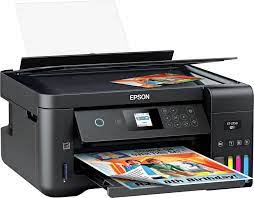 A printer is a device that produces a hard copy output such as text and graphics on a physical material like paper.
Printed information (hard copy) exists physically and in a more permanent form than a soft copy on a display device. Printers with different speeds, features, quality, and capabilities are available at a range of prices. Printers can be grouped into two categories: impact and nonimpact printers.
IMPACT PRINTERS
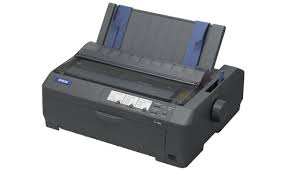 An impact printer forms characters and graphics on a piece of paper by a striking mechanism against an ink ribbon that physically contacts the paper. Impact printers are noisy because of this striking activity. Large Businesses use impact printers because these printers can withstand dusty environments, vibrations, and extreme temperatures. Commonly used types of impact printers include Daisy wheel, dot-matrix, Braille, and line printers.
DAISYWHEEL PRINTER
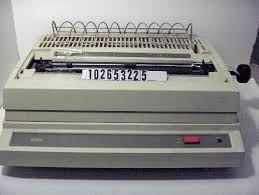 This is a kind of impact printer where characters are arranged on the ends of the spokes of a wheel. The wheel (usually made of plastic) is rotated to select the character to print and then an electrically operated hammer bends the selected spoke forward slightly, squeezing in an ink ribbon between the character and the paper, as in a typewriter. One advantage of this arrangement over that of a typewriter is that different wheels may be inserted to produce different typefaces (font styles and sizes) Low speed and noise are its disadvantages. The speeds are between 20 and 90 characters per second (cps).
DOT-MATRIX PRINTER
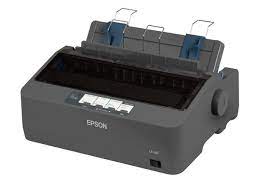 A dot-matrix printer produces printed images when tiny wire pins on a print head mechanism strike an inked ribbon like in a typewriter. When the ribbon presses against the paper, it creates dots that form characters and graphics. Most dot-matrix printers use continuous-form paper, in which thousands of sheets of paper are connected together end to end. The papers have holes along the sides to help feed the paper through the printer. Dot matrix printers provide cheap but low-quality printing.
BRAILLE PRINTERS
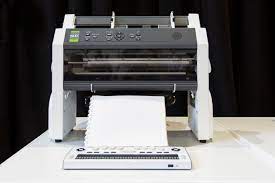 A Braille printer, commonly known as a Braille embosser, is an impact printer that renders text as
tangible dot cells which are felt and read by the blind. Using Braille translation software, a document can
be embossed with relative ease and efficiency. They need special Braille paper which is thicker and more expensive than normal paper. Once a copy is produced, printing further copies are often quicker by means of a device called a "thermoform", which produces copies on a soft plastic.
LINE PRINTERS
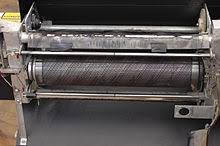 A line printer is a high-speed impact printer that prints an entire line at a time. The speed of a line printer is measured by the number of lines per minute (LPM) it can print. Some line printers print as many as 3,000 LPM.
Mainframes, servers, or networked applications, such as manufacturing, distribution, or shipping, often use line
printers.
NON-IMPACT PRINTERS
A nonimpact printer forms characters and graphics on a piece of paper without actually striking the paper. Some spray ink, while others use heat or pressure to create images. Commonly used nonimpact printers are; ink-jet printers, laser printers, thermal printers, plotters, and mobile printers.
INK-JET PRINTER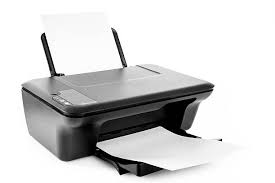 An ink-jet printer forms characters and graphics by spraying tiny drops of liquid ink onto a piece of paper. Ink-jet printers produce text and graphics in both black-and-white and color on a variety of paper types & sizes. The print head mechanism in an ink-jet printer contains ink-filled print cartridges. Each cartridge has very many small ink holes or nozzles. The ink propels through a combination of the holes to form a character or image on the paper.
A bubble jet printer is a type of inkjet printer in which bubbles (droplets) of ink are formed by rapid vaporization of the ink in the chamber and then propelled onto the paper.
THERMAL PRINTER
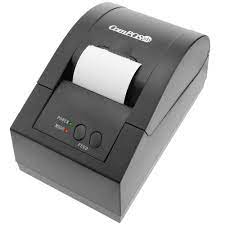 A thermal printer generates images by pushing heated pins against a coated heat-sensitive paper. The coating turns black in the areas where it is heated, producing an image. Basic thermal printers are cheap, but the print quality is low and the images tend to fade over time. Thermal printing technology is, however, ideal for use in small devices e.g. ATM receipt printers.
PLOTTERS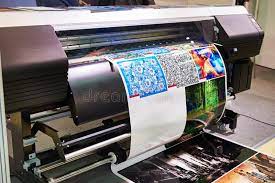 Plotters are printers used to produce large, high-quality, vector graphic drawings such as blueprints, maps, posters, and signs. These printers are usually very costly and are used in specialized fields such as engineering, and graphic art. They use ink-jet printer technology, on a much larger scale, to print professional quality displays.
MOBILE PRINTERS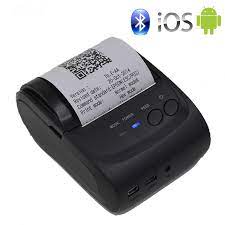 A mobile printer is a small, lightweight, battery-powered printer that allows a mobile user to print from a notebook
computer, Tablet PC, PDA, smartphone, or another personal mobile device while traveling. They fit easily in a briefcase alongside a notebook computer Mobile printers mainly use ink-jet, thermal, wax-transfer, or dye-sublimation technology.